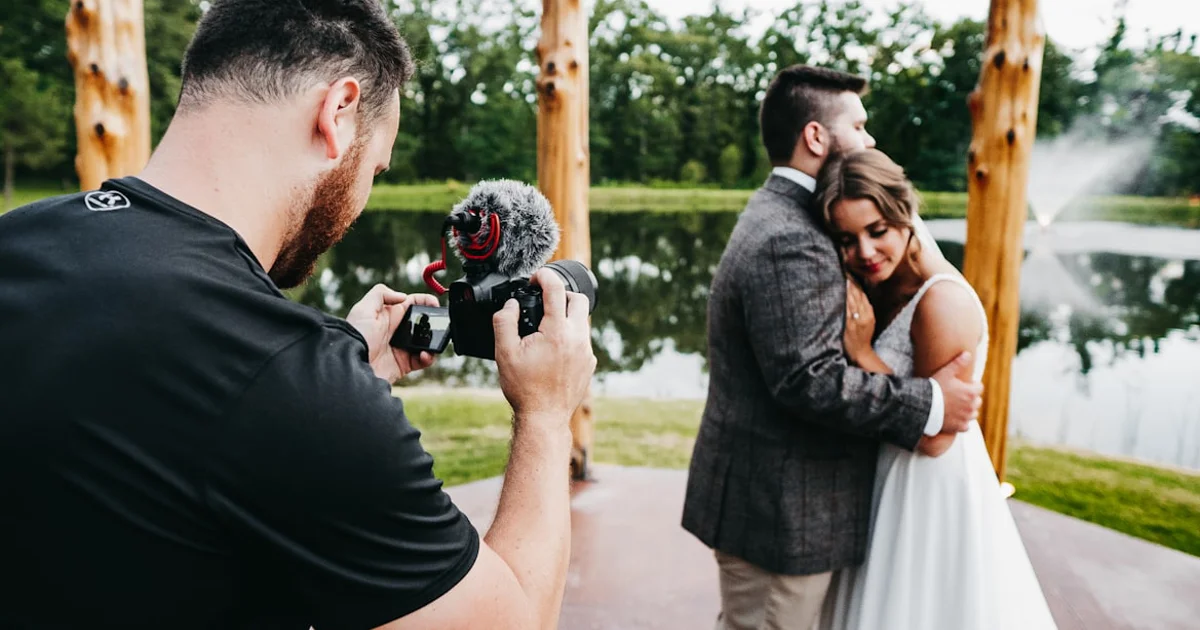
I have exactly one photograph from my wedding that I can look at without my heart sinking a little.
We had three months to plan our wedding. The date was two days after Christmas, the only one available, and everything happened fast. Too fast. I needed an expert and didn't have one. I needed tools and didn't have them. And when it came to the photographer, I ended up with whoever was available on short notice at a price that fit what was left of the budget after everything else went sideways.
The photos are blurry. The lighting is wrong. The moment Brian looked at me and said his vows, the moment I had waited three years for across every mile between us, is somewhere in a folder I can barely bring myself to open.
I'm telling you this because I don't want it to happen to you. Not the blurry photos. Not the wrong lighting. Not the folder you avoid.
Your wedding photos are the one thing you will have forever. The flowers die. The cake gets eaten. The dress goes in a box. But those photos? They're what you show your grandchildren. They're what you hang on the wall. They're what you cry over on your anniversary twenty years from now.
So let's get this right together. Here is everything I know about choosing a wedding photographer, learned the hard way, given to you freely.
Start With Style, Not Price
Budget is real and I am not going to pretend otherwise. But here's what I have learned from talking to hundreds of brides: the ones who started their photographer search with a number and worked backward almost always ended up disappointed The ones who started with style, fell in love with a portfolio, and then figured out how to make the numbers work? They're the ones sending me tearful thank-you messages years later.
Wedding photography comes in a few distinct styles and you need to know which one speaks to your soul before you look at a single price list.
Traditional and classic means posed portraits, formal family groupings, clean compositions. Timeless, structured, elegant. Perfect for couples who want heirlooms that won't feel dated in thirty years.
Photojournalistic and documentary means the photographer hangs back and captures moments as they happen. Your grandmother wiping her eye. Your maid of honor losing it during your first dance. The flower girl making faces during the ceremony. Unposed, raw, real. This is the style I am obsessed with, because it captures the truth of a day rather than a performance of it.
Fine art is heavily edited and moody, film-inspired, almost painterly. Soft light, romantic tones. Gorgeous if your venue and aesthetic match it.
Editorial is high fashion, dramatic, bold. You as the main character. Amazing for brides who want to feel like they stepped out of a magazine.
Most photographers blend styles but have a dominant aesthetic that runs through everything they shoot. Spend time on Instagram and photographer websites before you reach out to anyone. When a portfolio makes your stomach flip a little, that is your body telling you something. Listen to it.
The Portfolio Review Nobody Talks About
Everyone will tell you to look at a photographer's portfolio. Here is what they don't tell you: look at full galleries, not just highlight reels.
Any photographer can pull twenty stunning images from their best wedding ever and build a beautiful website around them. What you want to see is an entire wedding from start to finish. Getting-ready photos. Ceremony. Family portraits, the most technically demanding part of any wedding day. Reception. Speeches. Dancing. All of it, in sequence.
A highlight reel shows you their ceiling. A full gallery shows you their floor. On your wedding day you need someone who performs consistently, not just brilliantly when the light and moment happen to align perfectly.
Don't be shy about asking to see a complete gallery. Any photographer worth hiring will have them ready. If they hesitate or redirect you back to their favorites, that tells you something worth knowing.
What to Actually Ask During Consultations
Most brides walk into photographer consultations and ask about packages and pricing. That's the last thing you should be asking about. Here's what really matters.
"Have you shot at my venue before?" A photographer who knows where the best light falls at 4pm, where the unflattering back entrance is, and which corridor leads to the bridal suite is going to move faster and more confidently than one discovering all of it for the first time on your wedding day.
"What happens if you have an emergency on the day?" This is not a morbid question. It is a necessary one. Every professional photographer should have a backup plan they can describe clearly. If they stumble over this, be cautious.
"How long until we receive our photos?" Industry standard is six to eight weeks. Some photographers deliver faster. Some slower. Know what you are agreeing to before you sign anything.
"Can we meet before the wedding?" Your photographer will be one of the most present people on your entire wedding day. Closer to you than almost anyone. If your personalities clash or there is awkward energy between you, it will show in your photos. Meet them in person. Have coffee. You should feel completely at ease with this person.
The Red Flags I Wish Someone Had Warned Me About
After everything I have learned building Vowlio and talking to brides every single day, these are the things that should make you slow down no matter how appealing everything else looks.
A photographer who cannot show you recent work. Styles evolve. Someone who was exceptional five years ago might be doing something completely different now. You want to see what they are producing in the last twelve months.
Prices that seem unusually low with no clear reason. Newer photographers genuinely do charge less while building their portfolios and that can be a wonderful opportunity for the right bride. But if someone is offering full-day coverage at a price that makes no financial sense and their website looks polished but their testimonials feel thin, something does not add up.
No written contract. A verbal agreement means nothing. If a photographer resists putting the details in writing, end the conversation.
Slow communication during the booking process. If they take four or five days to respond to your initial inquiry, that pattern will not improve after they have your deposit. It will get worse.
The Budget Conversation You Need to Have With Yourself
The average wedding photography spend in the United States runs from $2,500 to $4,000 for full-day coverage. In major cities like Los Angeles, New York, and Miami, quality photographers often start at $5,000 or more.
I am not telling you this to frighten you. I am telling you because I have seen brides cut the photography budget to afford a nicer centerpiece and I have never once heard anyone say afterward that it was the right call.
If budget is genuinely tight, here are the smarter places to trim: book fewer hours of coverage rather than a cheaper photographer. Ask about Friday evening or Sunday rates, which are often significantly lower than Saturday. Look at talented photographers who are earlier in their career and building their portfolio.
But please, whatever you do, do not cut the photographer.
One Last Thing From Me
Brian and I are renewing our vows. After twenty years together I finally get to do it the way I always dreamed. Simple. Glamour. Elegance. And this time I am getting the photographer I always deserved — someone who will capture his face when he sees me walk in, the way the light hits my dress, the moment we both finally exhale and just be present with each other.
You deserve that the first time around. Every detail of it.
Start your photographer search in Vowlio's photographer directory and find someone whose work makes your heart skip. That is exactly where it begins.
After twenty years I can say this out loud: I deserve this. We deserve to celebrate us the way we want it.
So do you.
Vowlio brings the whole wedding into one place: your budget, guest list, seating chart, day-of timeline, vendor search, and wedding website. See everything Vowlio does for couples.
And if you are the vendor rather than the couple reading this: Vowlio puts a bookable profile in front of couples who are planning right now, and keeps your leads, contracts, and invoicing in one place. See how Vowlio works for vendors.
With love, Verla